Technical Due Diligence & Trust Report: Aldebaran / SoftBank Robotics — NAO (v6)
Education & HRI Research Platform | Last verified: 2026-02-02
A) Short Overview
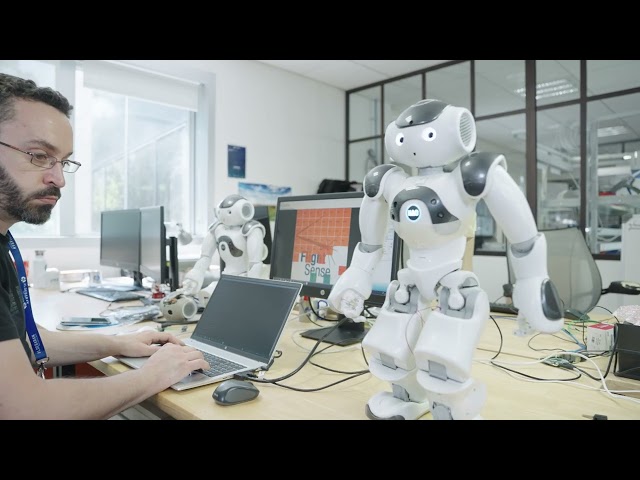
As of early 2026, the NAO (v6 / H25) remains the gold standard for small humanoid platforms in education and Human-Robot Interaction (HRI) research. Its primary value lies in its mature ecosystem, predictable bipedal walking, and the established NAOqi programming stack.
Lifecycle Context:
While historically tied to SoftBank Robotics and currently part of the United Robotics Group, procurement teams should note 2025 reports of asset takeovers by Maxvision Technology. It is critical to confirm long-term firmware and spare parts obligations in any new contract.
Commercial Availability:
NAO is marketed via direct inquiry through Aldebaran or authorized EU resellers. It is typically a quote-based procurement rather than a standard online checkout.
B) Key Facts (Verified Specs — NAO v6)
Category | NAO (v6 / H25) | Notes / Source |
Manufacturer | Aldebaran / SoftBank Robotics | Part of United Robotics Group |
Size / Weight | 574 mm / ~5.48 kg | Highly portable |
Degrees of Freedom | 25 DoF | Optimized for expression |
Compute / OS | Intel Atom E3845 / 4GB RAM | OS: OpenNAO (Linux) |
Cameras | 2× 5 MP (OV5640) | Dual perception |
Sensing | 3-axis IMU, Sonar, Tactile | Comprehensive sensor suite |
Connectivity | Ethernet, Wi-Fi, Bluetooth 4.0 | – |
Battery Life | ~60 min (active) / ~90 min (normal) | 90 min charge time |
SDK / Programming | NAOqi, Choregraphe, Python, C++ | High accessibility |
Note on ROS2: ROS2 support is primarily community-driven. While possible, it should be treated as an integration project rather than an “out-of-the-box” native feature.
C) Capabilities & Limits
Verified Capabilities (Can):
- HRI-Ready Perception: Dual cameras and a 4-microphone array enable robust face tracking and interaction experiments.
- Expressive Mobility: 25 DoF allow for complex gestures and bipedal walking demos, easily scripted via the Choregraphe visual interface.
- Academic Integration: A massive library of existing curricula and tutorials makes it ideal for STEM and university labs.
Known Constraints (Limits):
- Legacy Compute: The onboard Intel Atom processor is not designed for modern, high-load foundation models; heavy AI tasks require offloading to a PC or cloud.
- Environment: No official IP rating; intended for supervised, dry, indoor use only.
- Manipulation: Hands are designed for social expression, not for industrial-grade grasping or labor.
D) Verified Deployments
- RoboCup Standard Platform League (SPL): NAO is the official platform for the SPL, ensuring its status as a benchmark for research and competition.
- Education & Labs: Deployed in thousands of universities and schools worldwide for robotics and AI education.
E) BotReburn Trust Note (Procurement Guidance)
- Contract Clarity: Given the 2025 ownership transitions, insist on written confirmation regarding future firmware updates and the availability of spare parts (especially batteries and joints).
- Warranty Bundles: Warranty terms vary significantly; ensure you secure a multi-year bundle that includes battery degradation coverage.
- ROS2 Integration: Budget engineering time for driver setup if your lab requires ROS2; native support is limited compared to newer industrial humanoids.
- Privacy Compliance: Schools must establish clear data recording and consent policies, as the robot is equipped with high-resolution cameras and sensitive microphones.
F) Sources
- A1: Aldebaran Support & United Robotics Group Documentation.
- A2: Official NAO v6 (H25) Technical Datasheet.
- B1: RoboCup SPL Official Resource Site.
- C1: 2025 Maxvision Asset Acquisition Reports.